

Update (October 2026)
The COVID-19 concessions described in this 2022 article, including the further WHM visa for those affected by COVID-19 and the nil visa application charge, were temporary and are no longer available. Standard eligibility, specified work and fee rules now apply. See our Working Holiday visa (subclass 417) and Work and Holiday visa (subclass 462) pages for current requirements.
On 5 March 2022, significant changes to Working Holiday Maker (WHM) Visas Subclass 417 and Subclass 462 were introduced through migration legislation. These include:

1. Working Holiday Visa Extension
This change allows for onshore Working Holiday Maker Visa Holders impacted by COVID-19 through the inability to work and travel without restriction, to be granted a further WHM visa to remain in Australia for an extended period. This will give Subclass 417 and Subclass 462 visa holders the opportunity to meet specified work requirements and apply for further WHM visas.
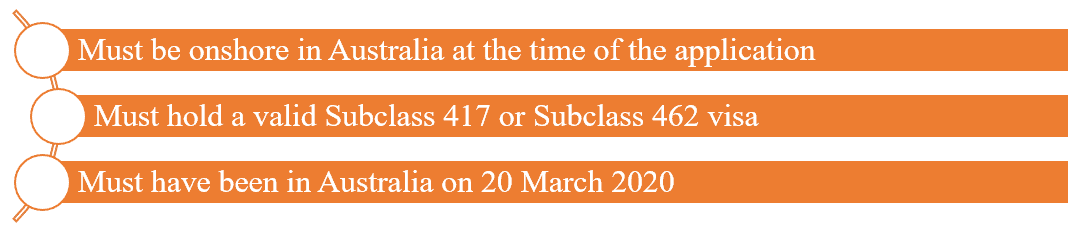
To be eligible the following criteria apply:
2. Exceptions to Visa Application Process
Due to the nature of COVID-19 and travel restrictions, the Australian Government acknowledges that this has provided obstacles for individuals needing to renew or reapply for passport documentation. As a result, when applying for a working holiday maker visa extension, the Government has allowed applications to be made without a valid passport. This gives applicants extra time to allow for their passports to be renewed and validated. However, it must be noted that the Working Holiday Maker Visas will NOT be granted without a valid passport. Therefore, applicants must ensure their passports are renewed and valid at the time of the visa grant.
3. Nil Visa Application Fees for Eligible Applicants
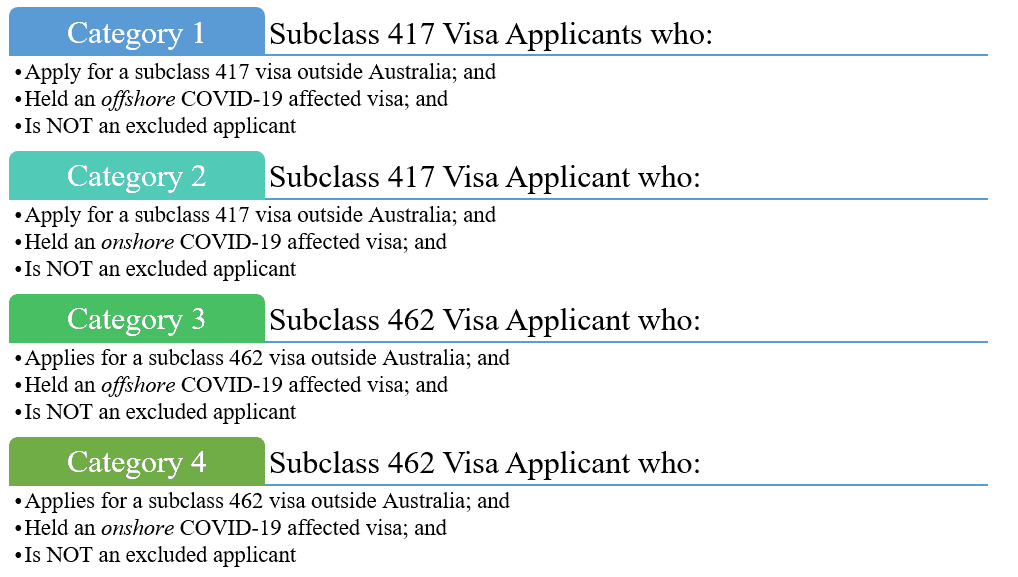
The changes implemented for Working Holiday Maker Visas allow for applicants that meet the relevant criteria to be eligible for NO visa application charge (VAC). Those eligible for the nil VAC are as follows:
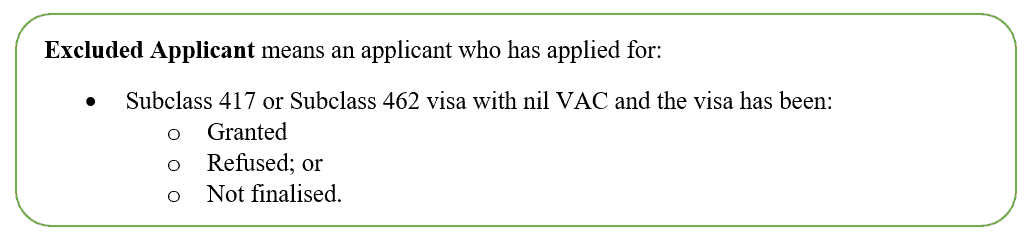
The definition of ‘excluded applicant’ essentially means that an individual who is eligible for the nil VAC cannot receive this benefit twice.
4. Expanded definition of ‘specified work’ for requirements under Subclass 417 and Subclass 462 visas
Working holiday makers can work in ANY occupation or industry in Australia for generally up to 6 months. Visa holders can choose to undertake specified work to become eligible for a second or third subclasses 417 or 462 visa to extend their time living, working, and travelling in Australia. The definition of ‘Specified Work’ has expanded to include:

What this means in 2026
The COVID-19 concessions in this article were temporary. The extra Working Holiday Maker (WHM) visa for people affected by the pandemic and the nil visa application charge have both ended, and the standard rules apply again. Working holiday makers remain an important source of seasonal and regional labour, so the program is still open, but it is now under review.
| Rule (2026) | Working Holiday (subclass 417) | Work and Holiday (subclass 462) |
|---|---|---|
| Age | 18 to 30, or up to 35 for some countries (for example Canada, France, Ireland and the United Kingdom) | Usually 18 to 30, or up to 35 for some countries |
| Entry requirements | Passport from an eligible 417 country | Passport from an eligible 462 country, functional English, education requirements and, for some countries, a letter of support; places are capped, and some countries (China, India and Vietnam) use a pre-application ballot |
| Second visa | 88 days (3 months) of specified work in regional Australia on the first visa | 88 days (3 months) of specified work on the first visa |
| Third visa | 6 months of specified work on the second visa | 6 months of specified work on the second visa |
| Work limits | Generally up to 6 months with each employer, with some exceptions | Generally up to 6 months with each employer, with some exceptions |
| Visa charge | Standard charge applies (no COVID-19 fee waiver) | Standard charge applies (no COVID-19 fee waiver) |
Who this affects now
UK passport holders no longer need to do specified work to apply for a second or third Working Holiday visa. This change started on 1 July 2024 under the Australia and UK Free Trade Agreement. Everyone else must still complete and evidence specified work, such as farm, mining, construction, tourism and hospitality work in eligible regional postcodes, or critical work in some sectors.
On 17 September 2026 the Government announced plans to replace the automatic second and third year visas with a capped ballot: about 45,000 places for second year visas and 5,000 for third year visas, with the regional work requirement kept as an entry condition. As at November 2026 this needs new regulations and has no start date, so the current rules still apply. If you are planning a second or third year, keep full payslips and records of your specified work now, because you will need them whichever system applies.
Next steps
- Check that your country and age make you eligible for a 417 or 462 visa.
- If you want to stay longer, plan your specified work early and keep evidence of every day worked.
- Check the current visa charge before you apply, as charges usually rise each 1 July.
- If you would like to stay in Australia long term, look at skilled, employer sponsored or regional visa options while you are still on your WHM visa.
Read more: Working Holiday visa (subclass 417), Work and Holiday visa (subclass 462), working beyond 6 months on a Working Holiday visa, visa charges from 1 July 2026 and Australian migration news October 2026. To discuss your options, book a consultation.
Related guides
- Working Holiday Visa (Subclass 417)
- Work and Holiday Visa (Subclass 462)
- Work Beyond 6 Months on Working Holiday Visa
- Visa Flexibility for Working Holiday Makers Supporting Critical Sectors
- Changes to the Working Holiday Maker Visa to Assist in COVID-19 Tourism and Trade Recovery
- Visa application charges from 1 July 2026
- Book a consultation



H-1B $100,000 Fee Blocked: What the Proposed $103,265 Fee Means
New US$4,000 H-1B and US$4,500 L-1 Fee on Extensions
US Green Card Changes: Interview Pause and Stricter Public Charge Test
US Visa Bulletin November 2026: Family Dates Jump and EB-2 Moves Forward
US Visitor and Student Visa Changes: ESTA Fee, Visa Integrity Fee and Duration of Status