

Update (October 2026)
These figures are from 2018-19 and 2019-20 and are kept as published. Processing offices and timeframes have changed since then, so check the current partner visa processing times. For 2026 rules and costs, see “What this means in 2026” below and our offshore partner visa guide.
The Partner (Provisional) subclass 309 visa allows the de facto partner or spouse of an Australian citizen, permanent resident or eligible New Zealand citizen to travel to Australia. A subclass 309 visa holder can live, work and study in Australia while waiting for the Department of Home Affairs (DoHA) to process his/her permanent Partner (Migrant) subclass 100 visa.
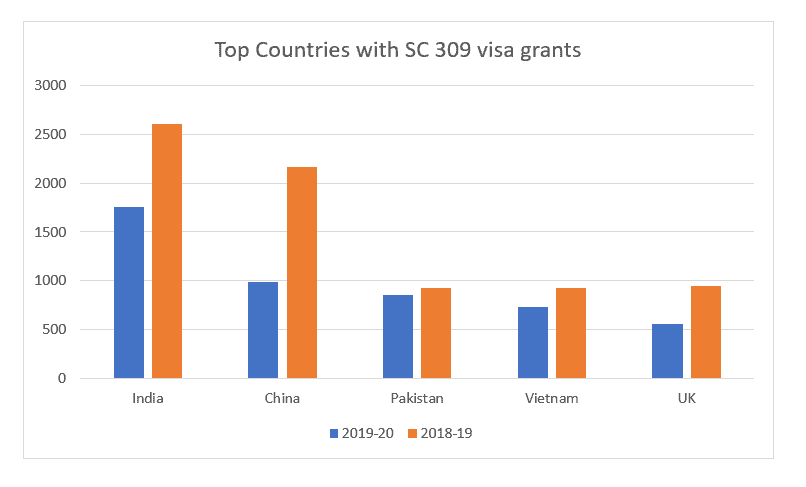
For the two years to 2019-20, India, China, Pakistan, Vietnam and the UK had the most subclass 309 visa grants. In 2018-19, the top five rankings are as follows:
- India (2,603)
- China (2,120)
- UK (944)
- Pakistan (923)
- Vietnam (922)
For the 2019-20 year (until 30/04/2020), the top five countries remained the same but with different rankings:
- India (1,755)
- China (993)
- Pakistan (857)
- Vietnam (728)
- UK (559)
India and China remained the top two countries with the most subclass 309 visa grants. UK is also the only country in the top five from the European region.
309 visa lodgements by gender
We also found data which shows the visa applications lodged for subclass 309 by citizenship and gender.
Male 309 visa applicants
In 2019-20, the top countries to lodge a subclass 309 visa by male applicants were:
- China (652)
- UK (566)
- India (428)
- Vietnam (348)
- Afghanistan (350)
Female 309 visa applicants
For female applicants, the top countries were:
- India (1,536)
- China (797)
- Vietnam (778)
- Pakistan (708)
- Afghanistan (538)
Overall, there were more female applicants than male applicants. During that period, 9,657 applicants were female, and 5,468 applicants were male.
Top Offshore Partner Visa Processing Offices
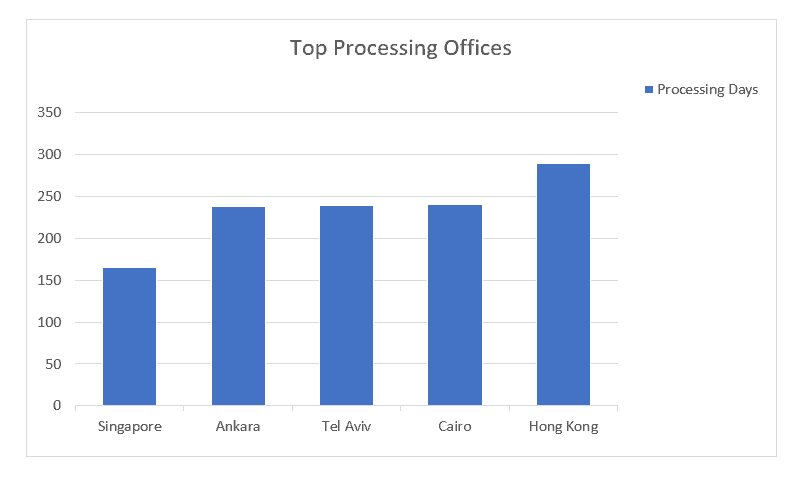
The government has set up different offices around the world to process subclass 309 visa applications. Among them, the top five processing offices with the shortest median processing times are:
- Singapore (164.66)
- Ankara (238.17)
- Tel Aviv (238.94)
- Cairo (240.92)
- Hong Kong (284.89)
That is, it takes approximately 5.4 months for Singapore office to process the visa. The office with the longest processing time is in Auckland. The average processing time there was 1,672 days, approximately 4.5 years.
What this means in 2026
The country rankings above show where offshore partner visa applicants came from in 2018-19 and 2019-20. Whatever your country, the rules for the offshore partner visa are the same, and the strength of your application depends on your relationship evidence, your sponsor and meeting health and character requirements, not on your nationality.
How the offshore partner visa works now
| Visa | Who it suits | Key points |
|---|---|---|
| Subclass 309 Partner (Provisional) | Applicants outside Australia married to, or in a de facto relationship with, an Australian citizen, permanent resident or eligible New Zealand citizen | You lodge the 309 and 100 together and must be outside Australia when you apply. Since 25 November 2023 the 309 can be granted whether you are in or outside Australia (but not in immigration clearance). Once granted, you can live, work and study in Australia. |
| Subclass 100 Partner (Migrant) | 309 holders whose relationship is continuing | The permanent stage is usually assessed about 2 years after you lodged the combined application. You provide updated relationship evidence at that time. |
| Subclass 300 Prospective Marriage | Applicants outside Australia who plan to marry their Australian partner | You must marry within the 9 month visa period and then apply for the onshore 820/801 partner visa. |
| Subclass 820/801 Partner (onshore) | Applicants already in Australia on a visa that allows an onshore application | Lodged in Australia, usually with a bridging visa while it is processed. |
From 1 July 2026 the base application charge for the 309/100 partner visa is AUD 11,710, the same as the onshore 820/801. There is no English test for partner visas: the English requirement announced in 2020 was never introduced.
Who this affects
- Couples living apart: if your partner lives overseas, the 309/100 is usually the main pathway. Keep strong evidence of communication, visits and shared plans.
- Applicants who visit Australia while waiting: you may be able to visit on a visitor visa. Since 25 November 2023 you no longer have to leave Australia for the 309 to be granted, but your visitor visa conditions still apply.
- Sponsors: a sponsor can generally sponsor no more than two partners in their lifetime, with at least 5 years between sponsorships, unless there are compelling circumstances.
Next steps
- Check which partner visa suits you on our partner visa guide.
- Gather evidence using the partner visa document checklist and our top tips for partner visas.
- Check current processing times before you plan travel.
- Book a consultation to have your relationship evidence and strategy reviewed before you lodge.
Related guides
- Offshore partner visa (309/100)
- Partner visa Australia requirements
- Onshore partner visa (820/801)
- Fiancé (prospective spouse) visa
- Partner visa processing times
- Partner visa grants, refusals and processing times (2020)
- How long does it take to get 801 visa after 820
- English test for permanent stage of partner visas (never introduced)
- Australia visa waivers and refunds
- Major partner visa changes (2020 Budget)



Doctors and Lawyers: When Registration or Admission Is Your Skills Assessment
Married, Separated or Had a Baby After Your Skilled Visa Invitation?
Second Jobs, Volunteering and Overseas Work on a 482 Visa
Australian Study Requirement: RPL, Overlapping Courses and Time Offshore
Australian Migration News: October 2026 Update